We remain fully operational. Our teams are working around the clock to ensure your deliveries continue safely.

DOWNLOAD THE APP


Copyright © 2025 Desertcart Holdings Limited
DOWNLOAD THE APP
Buy anything from 5,000+ international stores. One checkout price. No surprise fees. Join 2M+ shoppers on Desertcart.
Desertcart purchases this item on your behalf and handles shipping, customs, and support to Slovenia.
🛠️ Fix it once, fix it right—Alumaloy keeps your gear running strong!
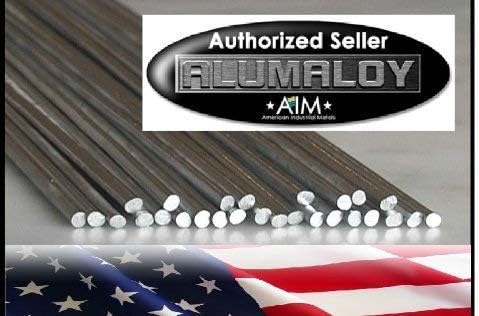
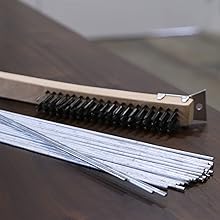
Alumaloy 20 Rods are premium, USA-made aluminum brazing rods designed for easy, flux-free repairs on aluminum, pot metal, and galvanized steel. Melting at 728°F, they enable precise, distortion-free welding with a tensile strength of 39,000 psi, ensuring permanent, durable fixes. Eco-friendly and lead-free, these rods are perfect for professionals and DIYers aiming to save money and reduce waste while maintaining top-quality repairs.

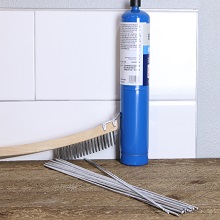
| ASIN | B01MQX8QJY |
| Best Sellers Rank | #83,353 in Automotive ( See Top 100 in Automotive ) #50 in Arc Welding Rods |
| Brand Name | ALUMALOY |
| Compatible Material | Metal |
| Customer Reviews | 4.0 4.0 out of 5 stars (2,264) |
| Grit Material Type | Alumaloy rods |
| Grit Number | 36 |
| Grit Type | Alumaloy rods |
| Item Dimensions | 12 x 0.05 x 0.05 inches |
| Item Weight | 14.5 Ounces |
| Manufacturer | Alumaloy |
| Material Type | Alloy |
| UPC | 616316445413 733353983958 |
J**E
Easy aluminium repair.
My youngest son was able to braze with these. And did a great job.
A**R
Seem to work as advertised
I actually had fun playing with this, and was able to weld several pieces together. Adhesion and strength both seemed fine. however I couldn’t get it to work on the one project I really bought this for. I have a pressure washer with an aluminum manifold that cracked during last winter… I guess I forgot to drain it completely. I think it would’ve worked, but I could not get the temperature high enough for the aluminum to flow into the crack. Maybe it’s because it’s a rather large aluminum piece, and the rest of the block was fairly cool, but I could not get the part I was trying to heat to go above 495°… And these rods don’t really seem to work until you get it closer to 700. (I was using a digital thermometer to read surface temperature ) As I said I was able to do that on several smaller pieces, so it does seem to work. It just might be problematic on large hollow pieces that tend to conduct heat away from the area you are working on. In any case, it was worth a shot. if I could’ve save the pressure washer I would’ve saved six or $700 . I’m sure I will find other uses for this, and It is handy to have around
0**D
LEARN TO USE CORRECTLY and these are great
These rods are extremely simple to use, and so far are perfectly effective. The only thing you need to do is use it correctly, which is a simple matter of heating up the surface of intended use to a high enough temperature (i use a MAP torch), then apply the rod. Never allow the rod to contact a torch flame, this produces very destructive impurities and results in failed welds. There is ample information and how to videos online.
K**N
Preparation is Key
I had to practice use of this rod several times before i had any success. This is true for all forms of welding. I had some scrap aluminum laying around, cleaned it, and was using a small Oxy/Act brazing tip. Does flow quickly when applied at the correct time. For the cost of the rods, it is definitely worth trying. What you are trying to repair is already messed up, what do you have to lose?
C**E
Once you get the hang of it, you will be as pleasantly amazed as I was
Bought these twice. First time I was skeptical. As we all know, videos showing how great a product is rarely works out that way. BUT, I ordered some anyway. At first I had a hard time getting them to adhere to my work. I was joining 1” square brace tubing about an 1/8” thick onto a rectangular frame made of the same kind of material which was aluminum. I heated the parts, but unknowingly wasn’t getting the material hot enough. The rod melted too soon being in too close proximity to the flame. I tried filling in a hole in an aluminum beer can like they showed on the video and it worked perfectly. Strong and able to easily span the hole I punched into the can. I simply superheated the area around the hole and then swirled the rod around the opening allowing the rod to get heat from the edges of the butane torch I was using but mostly picking up heat to melt the rod from the can. Keeping the rod moving was the trick, pulling it away fro a second then swirling it around again. I then used the same method for the heavier material. It took much longer at max heat to get the frame material hot enough because aluminum disperses the heat throughout the work piece. What I found worked best is not to even try to weld the pieces together until I held the heat on the (clamped joint) at least for a count to 100. I also had some inside joints to weld. So after the piece was hot enough, I flowed out some rod and spread it into the joint with an old steel screwdriver. To my amazement the next day when I was putting my tools away, I noticed there was some of the rod material still on the blade. I couldn’t scrape it off so tried my wire wheel mounted on one side of my bench grinder. To my surprise it wouldn’t take it off. I had to grind it off. I hoped the rod would work on aluminum, but wow! Steel too! Try it and it’ll work and you’ll love it. I love this stuff and ordered more to keep around the shop
D**S
Short weight/dishonest seller, poor adhesion - AVOID
When I received the bundle of rods, it just didn’t feel like a full pound. So I weighed it, and it came up ~9% short; 14.5 oz vs 16, or 415 grams vs 454. (And yes, my scale was accurate, I checked it against my analytical balance and it was spot-on to the gram.) That’s bad enough, but the alloy just doesn’t seem to stick very well. I had scrupulously clean aluminum (wire wheel and solvent) and MAP gas with plenty of heat on small parts, and it seemed this brazing alloy just laid on the surface. It appeared to wet well, and there was some adhesion strength to the joints, but they were much easier to break than they should have been, and when broken, there seemed to be almost no places where the brazing material actually alloyed with the base metal. I’m going to spend the money for some HTS-2000, wish I’d done so in the first place. It’s more than 2x the price, but apparently works very reliably. (I have seen accounts of people having good luck with Alumaloy, though, which makes me wonder if this is even that alloy.) (update, a few hours later) FWIW, I did manage to get a strong (but messy-looking) joint, using the lap-joint method shown in The Alumaloy videos on YouTube. You pre-wet the pieces to be joined with the brazing material, then heat and press together. It's important to keep the two pieces motionless while the joint solidifies, which can be a little tricky, and as noted, the joint was pretty messy when I was done, but it was extremely strong. Fillet joints were easy to get pretty-looking, but if I torque the joined parts with much force at all, they'll break loose. I may be able to use this for my current project, as it's a very light-weight frame that won't have any extreme forces on it. I did go ahead and order a pound of the HTS-2000 though, which more people seem to have good success with. (Amazon doesn't carry it, though; I had to order direct from the aluminumrepair site.)
H**.
Creí que este seria el producto que me ayudaría en muchas de las reparaciones que hago, hice las pruebas en latas de aluminio como se ve en la TV y, si, corre de maravilla y cubre muy bien, pero cuando intenté reparar una pieza de acero inoxidable no sirvió. Yo creí que podría unir cualquier metal pero no es así, solo aluminio con aluminio.
R**.
J'ai soudé le coeur d'un éventail en aluminium et ça a très bien tenu.
F**N
Fait la job a date... À suivre sur la qualité de soudure à plus long terme
P**E
Not useful for thin material, the amount of heat needed to get product to flow, starts distorting thin material.
P**Z
easy to use !
Trustpilot
3 weeks ago
3 weeks ago